

BMW 8026
The BMW 8026 turbojet was designed and manufactured by BMW Triebwerkbau GmbH in Munich-Allach. Derived directly from the BMW 8025, it was intended to power unmanned aircraft and short-range missiles, or to provide take-off and climb power for a self-launching sailplane. In the latter application, the primary aim was to eliminate the need for winch launching or aerotowing.
In December 1961, a BMW 8026 successfully completed testing in accordance with CAR Part 13 requirements and was subsequently cleared for flight testing.

BMW 8026 Overview
It weighs 38 kg and consumes 18 litres of diesel fuel in 25 minutes.
BMW suggested 15 min for take-off and climb to 6,600 ft, there after soaring with 10 min power always available should lift be absent.
The engine was started using an electric starter controlled from the cockpit. Lubrication was provided by adding oil to the fuel.
BMW stated that no maintenance was required other than refuelling.
Applications
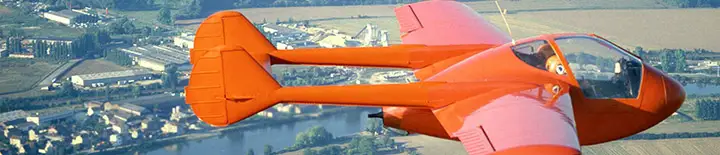
This turbojet was fitted to the Hütter H30 TS and Heinkel Greif 1b sailplanes.

Le motoplaneur à réaction Heinkel Greif 1b est une évolution du planeur Greif 1a, conçu en 1959 par un jeune étudiant prometteur, Otto Funk. Bien qu’il ait pu logiquement porter le nom de FK1, il a été construit pour le compte de la société Heinkel à Speyer, ce qui explique sa désignation. Otto Funk, qui […]

Présentation générale du motoplaneur Hutter H30TS Le motoplaneur Hutter H30 TS se présente sous un aspect assez classique, avec un empennage « papillon » et une voilure à grand allongement et profil laminaire. On peut dire que son histoire démarre en 1954, époque où commençait à peine à s’amorcer le prodigieux essor des plastiques stratifiés. Eugen Hänle était […]